Research
Department of Sport Sociology and Management
Research focus
The department of Sport Sociology and Management examines current issues and challenges sports organisations are facing, e.g. professionalisation, digitalisation, sustainability and inclusion. Based on a comprehensive, in-depth analysis, the respective projects provide knowledge and good practice concepts for the management and further development of sports organisations, with a particular focus on how sports federations can successfully advise and support their clubs.
Symposium: Federation Advisory Programmes for Sports Clubs
As part of the master's module “Management in Sports Organisations,” students explored the question of how sports federations can effectively support their clubs with advisory programmes. The results were presented on the 17th of June 2025, at a symposium attended by numerous representatives from federations and clubs. This was part of the current research area, which is working with various Swiss sports federations (SFV, STV, Swiss Tennis, Swiss-Ski) to investigate how federations can design advisory programmes to enable sports clubs to successfully tackle current challenges and develop in a goal-oriented manner.
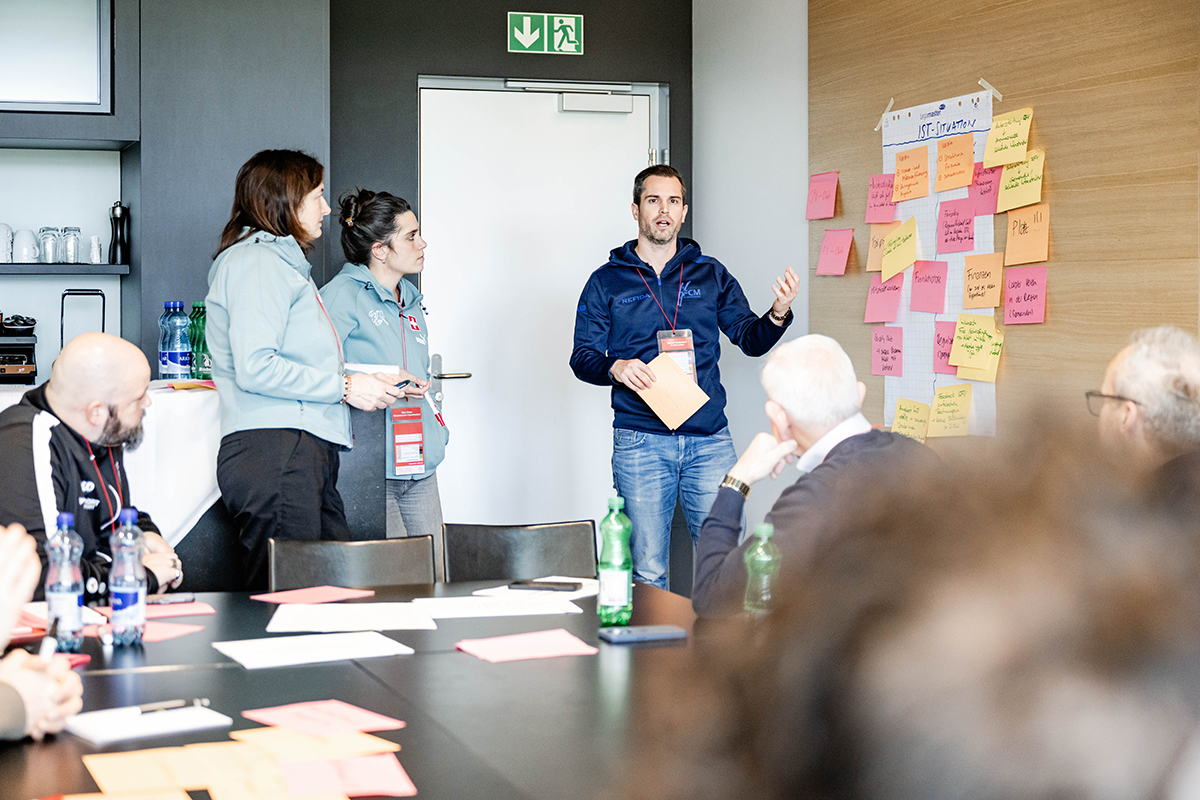
The findings presented by the students show that, on the one hand, clubs value a clear structure and guidelines, interaction with other clubs as well as their federation, and good practice inputs. On the other hand, a certain degree of flexibility in advisory programmes is crucial. Long-term mentoring from the federation, process-accompanying workshops, awards and certification are helpful for successful implementation of strategic actions.
In further cooperation and current dissertation projects, it is planned to explore the following questions in greater depth:
- How do federations design advisory programmes and to what extent are clubs actively involved in this process?
- How are programmes implemented at the federation–club interface, and which components (e.g., standardisation, mentoring, incentives) have the strongest influence on its success?
- What long-term effects do advisory programmes have on club development?
Siegfried Nagel