Research
Department of Sport Psychology and Research Methods
Personal narratives and self-perception in the age of digitalisation
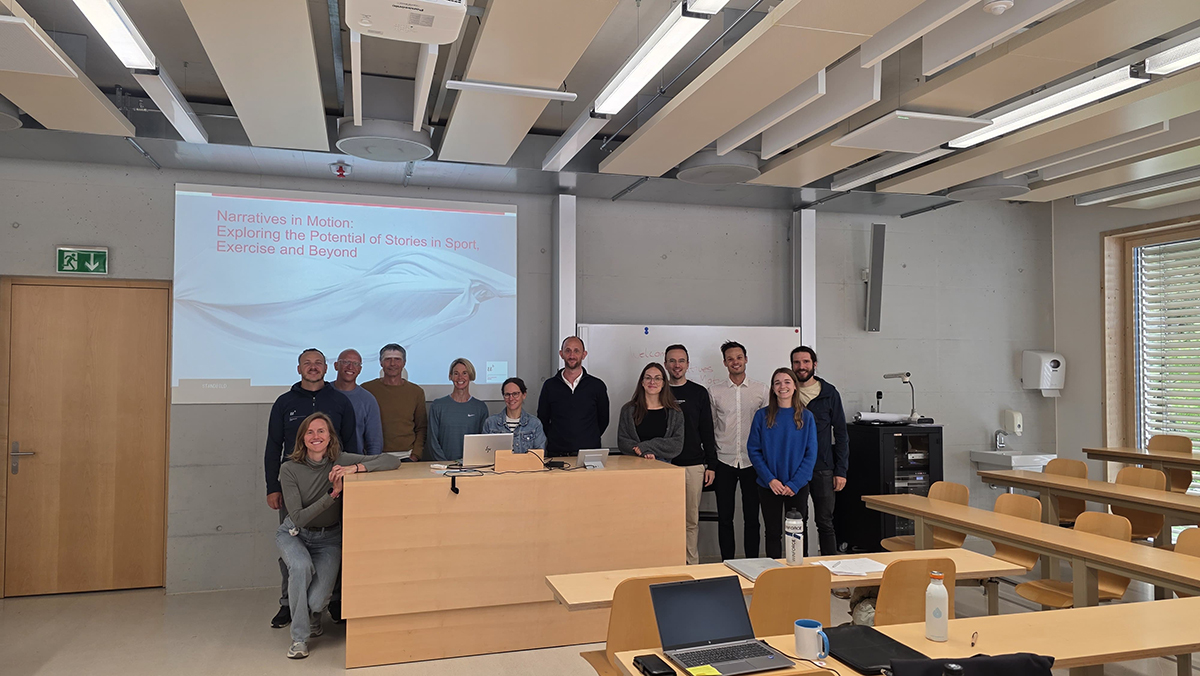
In line with the focus on qualitative research in the symposium "Narratives in Motion: Exploring the Potential of Stories in Sport, Exercise and Beyond", other research projects conducted by the department of Sport Psychology and Research Methods also place great emphasis on the individual experiences of people. For example, the question of what effects the use of self-tracking technologies has on their users is being investigated. The thesis is that tracking technologies can be an extension of both the mind and the body, influencing self-perception and the learning of new and changed beliefs in the area of self-awareness. Furthermore, it is being investigated how this affects situations in which users of tracking technologies receive different information from their trackers and their self-perception. This is particularly interesting in relation to the perception of one’s own fitness and the general physical well-being of the individuals concerned. Accordingly, the question of whether tracking technologies can trigger certain affective dissonances in their users is of interest.
Publications
Schmidli, X. (2025). Creating dissonance: Self-tracking devices and their effects on users [Abstract]. Current Issues in Sport Science, 10(2), Article 059. https://doi.org/10.36950/2025.2ciss059
Schmidli, X. (2025). On self-tracking and hostile scaffolding: When our devices work against ourselves [Abstract]. International Association for the Philosophy of Sport, 52nd Annual Meeting, Book of Abstracts (p. 100-101).
Schmidli, X. (2024). Tracking devices as extensions of the embodied self [Abstract]. 21st British Philosophy of Sports Association Annual Conference (p. 43).
In addition, the department of Sport Psychology and Research Methods deals with issues in the areas of identity and meaning in sport, athletic career development and transitions after athletic careers, as well as talent and youth development in sport.
Xenia Schmidli